Anna Wolf · 10 October 2026
Tracing Pine Needle Weaving Techniques Across Pacific Northwest Indigenous Communities Through Generational Knowledge Transfer
Indigenous communities across the Pacific Northwest have maintained pine needle weaving as a core practice for generations, with techniques passed through direct instruction from elders to younger members in structured family and clan settings. These methods rely on locally harvested pine needles from species such as ponderosa and lodgepole pine, combined with natural fibers for stitching and coiling. Data from ethnographic records maintained by the University of Washington indicate that the practice appears in at least twelve distinct tribal groups spanning coastal and interior regions, with variations in stitch patterns and basket forms tied to specific watersheds and seasonal gathering cycles.
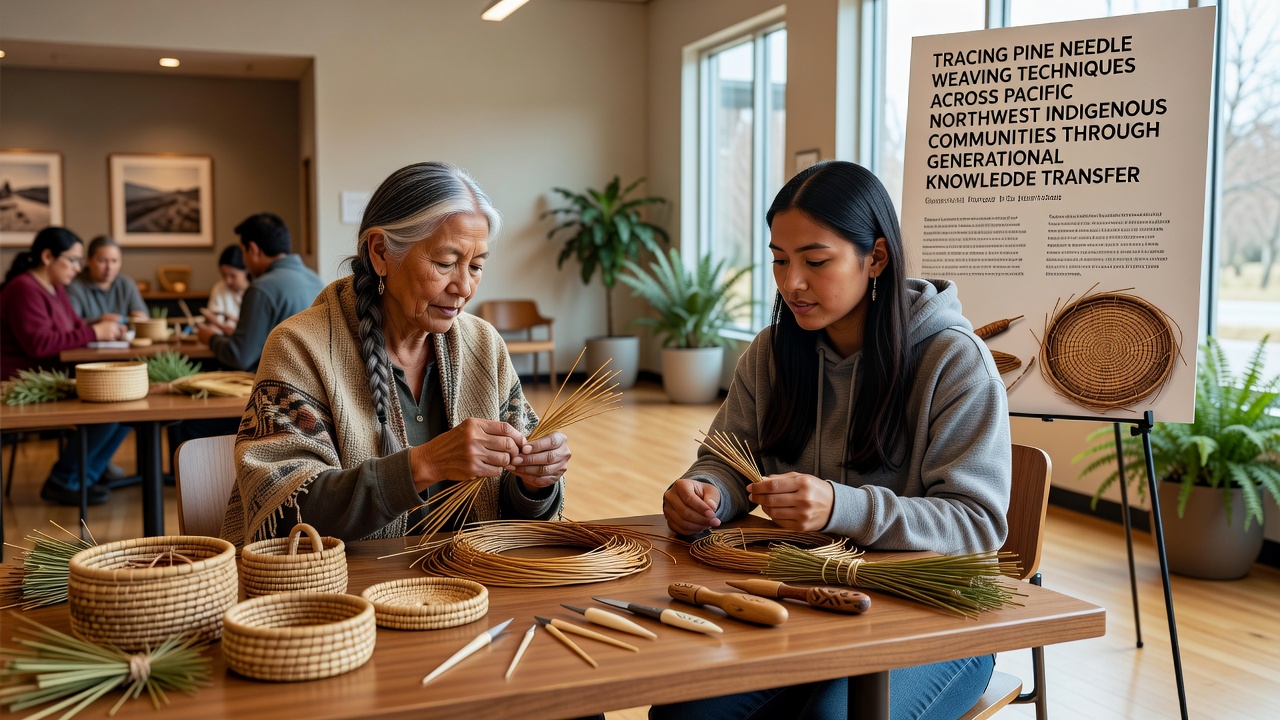
Knowledge transfer occurs primarily through repeated observation and hands-on participation rather than written manuals, where children begin by sorting and preparing needles under adult supervision before advancing to basic coiling exercises. Elders in these communities often integrate stories about resource locations and seasonal indicators during lessons, ensuring that practical skills remain connected to broader environmental awareness. Studies conducted by researchers at the University of British Columbia document how this oral and demonstrative approach has preserved distinct regional styles despite historical disruptions from boarding schools and relocation policies in the early twentieth century.
Regional Variations in Technique and Materials
Coast Salish weavers typically employ a bundle-coiling method that produces flexible mats and storage containers, while Interior Salish groups favor tighter spiral stitches suited for water-resistant vessels. Preparation steps include soaking harvested needles to increase pliability, followed by trimming and sorting by length and color, processes that take several days before weaving begins. According to records compiled by the National Park Service, weavers in the Columbia Plateau region incorporate cedar root splints alongside pine needles for added strength, creating hybrid structures that withstand heavy use during food processing and transport.
Harvesting follows established protocols that rotate collection sites to allow regrowth, with specific timing aligned to needle maturity in late summer and early fall. Community protocols recorded in tribal archives specify that only certain family lines hold rights to particular gathering grounds, reinforcing the link between technique and territorial knowledge. These practices continue in contemporary workshops organized by tribal cultural centers, where participants document each stage through photographs and notes to supplement traditional memory-based instruction.
Transmission Across Generations
Intergenerational teaching sessions often take place during winter months when outdoor activities decrease, allowing extended periods for skill development within longhouse or community hall settings. Young learners receive guidance on tension control and pattern alignment through direct correction and repetition, progressing from simple circular bases to complex geometric designs that encode clan symbols or seasonal markers. Research published by Oregon State University extension programs shows that successful transmission correlates with consistent participation rates across multiple age cohorts, with master weavers identifying apprentices through demonstrated patience and attention to material sourcing.
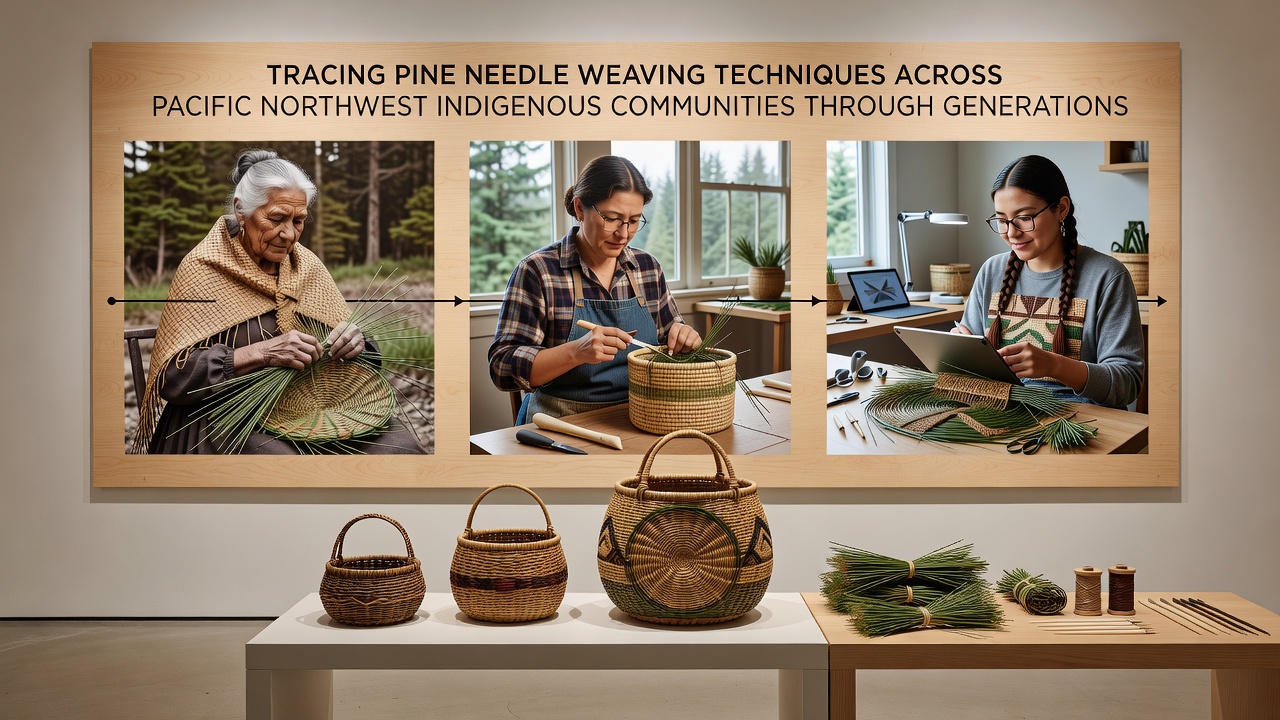
Language plays an integral role during these sessions, as many instructions rely on terms in tribal languages that describe both physical actions and cultural meanings attached to specific forms. Language revitalization programs in several communities have incorporated weaving vocabulary into classroom curricula, strengthening the connection between craft and linguistic continuity. Observers note that digital recordings of elder demonstrations now supplement in-person teaching in some areas, providing reference materials for learners separated by distance or scheduling constraints.
Contemporary Documentation and Continuation
Tribal museums and cultural heritage organizations have initiated projects to catalog existing woven pieces alongside oral histories from living practitioners, creating accessible archives for future reference. These efforts include partnerships with academic institutions that apply material science analysis to study fiber degradation and optimal storage conditions. Figures from the Canadian Museum of History reveal ongoing collection growth, with new acquisitions often accompanied by detailed provenance notes tracing lineage of both the object and its makers.
Events scheduled for October 2026 include multi-tribal gatherings focused on demonstrating these techniques to broader audiences while maintaining control over sensitive cultural elements. Participation remains guided by community protocols that prioritize internal knowledge holders as primary instructors. External interest has prompted some groups to develop limited public education modules, though core transmission continues through private family channels.
Conclusion
Pine needle weaving in Pacific Northwest Indigenous communities persists through deliberate, structured knowledge transfer that adapts to contemporary conditions while retaining core material and procedural elements. Documentation projects and institutional partnerships provide supplementary tools, yet the primary mechanism remains direct, repeated interaction between generations. Continued adherence to harvesting protocols and teaching methods supports the practice's endurance across changing social landscapes.